


08 Jan How can Intense Pulsed Light improve your vision?
Article summary
Dry eyes, blurred vision at the end of the day, discomfort in front of a screen… If you spend more than 6 hours a day in front of a computer, these symptoms probably sound familiar. Intense Pulsed Light, already well known in dermatology, is now emerging as an effective, non-invasive solution to improve visual comfort.
This technology acts directly on the glands responsible for keeping the eye hydrated. It relieves inflammation, stabilizes the tear film, and improves visual clarity. But how exactly does it work? And who is this treatment really for?
The effects of Intense Pulsed Light on eye health
A targeted treatment for dry eye and blepharitis
Intense Pulsed Light (IPL) is used in ophthalmology to treat dry eye disease and blepharitis. These two conditions are often linked to chronic eyelid inflammation and dysfunction of the tear-producing glands.
IPL phototherapy acts on the small inflamed blood vessels around the eyes. It reduces inflammation and improves microcirculation, which decreases redness, itching, and sensations of visual discomfort.
The treatment is performed in the office, without anesthesia. Over a few sessions, patients generally report a noticeable improvement related to better hydration of the ocular surface, with reduced gritty/sandy sensation in the eyes, fewer excessive blinks, and more stable vision.
Stimulating the Meibomian glands for better tear quality
The Meibomian glands are responsible for producing the lipid layer of the tear film. When they are blocked or inactive, tears evaporate too quickly, leading to dryness and blurred vision.
IPL stimulates these glands by gently warming them. This controlled heat helps liquefy the secretions, releases them, and restores proper function, without pain. Tears become more stable, with a noticeable improvement in vision during prolonged screen exposure or at the end of the day.
Recent studies also suggest that IPL may improve visual quality in some patients with early macular degeneration by reducing periocular inflammation and supporting retinal function.
How IPL treatment works in ophthalmology
Intense Pulsed Light (IPL) treatment in ophthalmology is performed in a medical office, generally by a trained ophthalmologist such as Dr. Bela. It is quick, non-invasive, and does not require general anesthesia.
Before the session: a personalized assessment
Everything begins with an ophthalmic consultation during which Dr. Bela examines the eyes, measures visual acuity, and assesses the condition of the retina and macula. Optical coherence tomography (OCT) may be performed to visualize the deeper layers of the eye.
This assessment helps determine whether IPL is indicated, particularly in cases of dry eye due to inflammation of the Meibomian glands, or to stimulate tear secretion. The protocol is then tailored to your specific needs.
During the session: a comfortable treatment
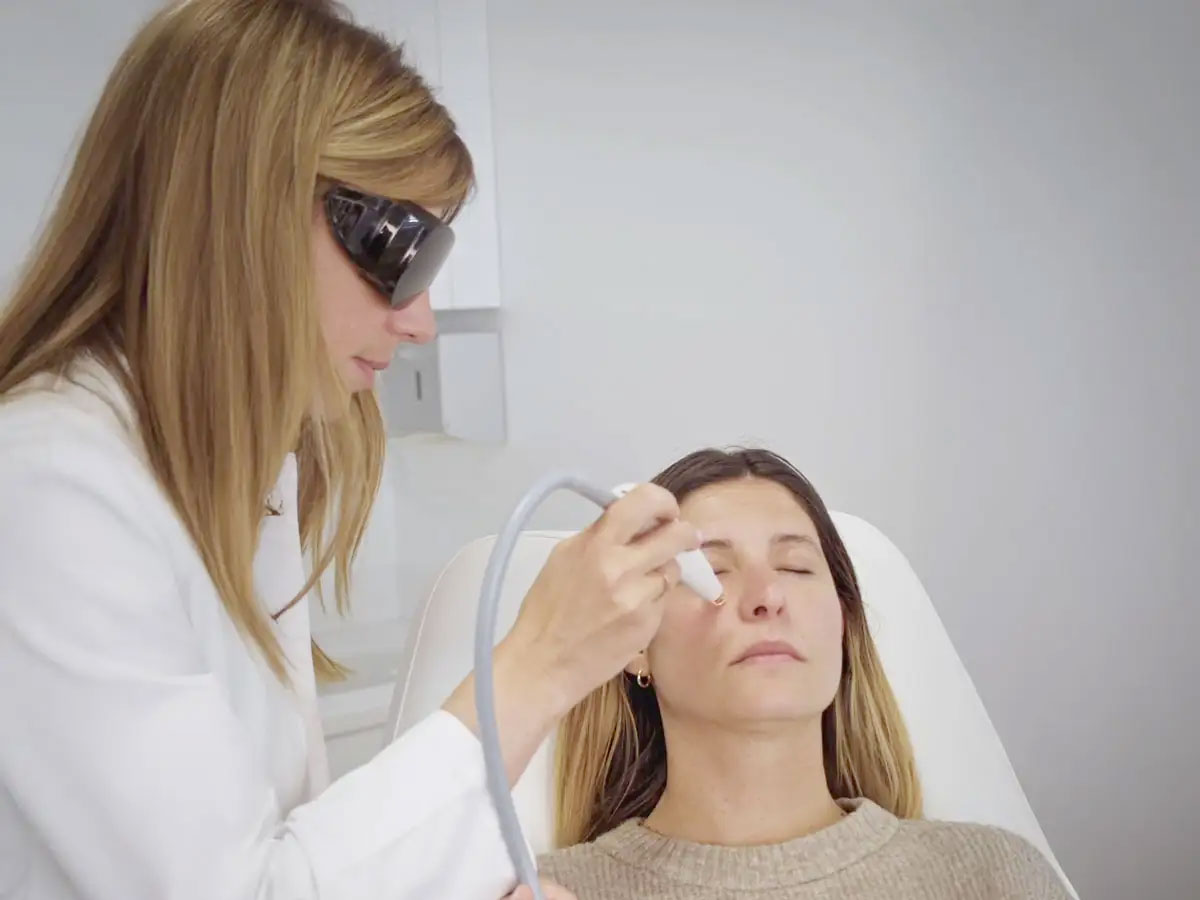
After the patient is settled, protective eye shields are placed over the eyes. A transparent gel is applied to the periocular skin, then the clinician delivers targeted light pulses to the lower eyelids and cheeks.
A session lasts about 15 minutes. Each flash acts on microcirculation, reduces signs of inflammation, and supports tissue regeneration, thereby improving tear film quality and visual clarity.
The treated areas include the eyelids, cheeks, and the eye contour. Most patients describe a pleasant warming sensation, without pain.
After the session: gradual results
The treatment is generally well tolerated. Mild redness or a sensation of warmth may occur, but they fade quickly. No social downtime is required: you can resume your activities immediately.
A series of 4 to 5 sessions spaced 2 to 4 weeks apart is often recommended for optimal effectiveness. Improvement occurs gradually: reduced ocular discomfort, better contrast perception, and enhanced visual comfort.
Eye treatments: what are the indications for photobiomodulation?
Dry eye disease and Meibomian gland dysfunction
Photobiomodulation is particularly effective in managing dry eye disease related to Meibomian gland dysfunction. These glands secrete the lipid layer of the tear film, and their obstruction destabilizes the ocular surface.
Photons activate tissue chromophores, leading to improved meibum fluidity, more effective blinking, and a marked reduction in symptoms: burning, redness, and visual discomfort.
Regular sessions help reactivate gland function. This non-invasive treatment is often combined with other ocular surface therapies such as warm compresses or eyelid massage, creating an optimal therapeutic synergy.
Macular degeneration, retinopathy, and chronic fatigue
In retinal conditions such as AMD, diabetic retinopathy, or chronic visual fatigue, red or near-infrared light targets the retina’s retinal ganglion cells directly.
Clinical results show a slowing of photoreceptor degeneration in dry AMD, sometimes with measurable improvements in contrast sensitivity and central vision. Patients also report less blurred vision and better tolerance of prolonged visual effort.
In summary, photobiomodulation acts in a targeted and deeper manner, offering strong prospects for preserving long-term visual health.
What concrete benefits for your visual comfort?
Long-lasting relief from eye strain
Prolonged screen exposure can cause eye strain, dryness, and blurred vision. IPL provides an effective response to these symptoms by addressing their underlying cause: inflammation and gland dysfunction.
In practical terms, patients report a significant decrease in forced blinking, fewer tension-related headaches, and improved visual clarity on screens. These improvements generally last for several months after treatment.
Measurable improvement in tear-film stability
Ophthalmology studies have confirmed that IPL provides lasting improvement in tear-film stability. Objective tests show an increase in tear breakup time (TBUT) and a reduction in osmolarity—two key markers of ocular comfort.
This improvement is particularly beneficial for people with high screen exposure, allowing them to work longer without discomfort and with better visual performance.
Safe, personalized follow-up
Treatment safety is well supervised, notably through follow-up with optical coherence tomography, enabling precise monitoring of the retina and ocular surface. Each protocol is adjusted according to your individual response.
Who is Intense Pulsed Light treatment for?
Intense Pulsed Light treatment is intended for people with ocular disorders linked to inflammation or impaired microcirculation. It is a targeted phototherapy aimed at improving visual function, not a cosmetic procedure.
Suitable candidates
Chronic dry eye disease: particularly effective for patients with Meibomian gland dysfunction that is resistant to conventional treatments (eye drops, warm compresses).
Ocular rosacea: IPL reduces inflammatory signs on the eyelids and improves tear-film quality, leading to a noticeable decrease in irritation and better visual perception.
Early retinal conditions: in some patients, IPL may be used as an adjunct to stimulate cellular regeneration of the retina or macula, notably in age-related macular degeneration (AMD) or early cataract.
Occupational visual fatigue: people experiencing photophobia or persistent eye strain due to intensive screen use benefit from improved periocular vascularization and increased contrast sensitivity.
Contraindications
Treatment is not recommended in certain situations:
- Pregnancy or breastfeeding
- Presence of implanted electronic medical devices
- Active skin conditions in the treatment area
- History of photosensitive epilepsy
- Tanned skin
A thorough ophthalmic examination, including optical coherence tomography when appropriate, is essential before starting treatment.
Pulsed light or traditional treatments: which to choose?
Intense Pulsed Light represents a recent therapeutic approach in ophthalmology. It differs from more conventional treatments such as eye drops, ointments, or surgery. The choice of treatment depends on the nature and severity of the visual disorder, as well as the individual response.
When should Intense Pulsed Light be preferred?
IPL is particularly indicated for inflammatory dry eye, especially when related to the Meibomian glands. This non-invasive treatment stimulates microcirculation and reduces inflammation, helping to improve visual comfort and clarity in a lasting way.
It is also used in certain cases of retinal degeneration to activate cellular regeneration through photobiomodulation, which can help maintain good visual acuity. Its major advantage: a deeper effect without the side effects of systemic treatments.
What about traditional treatments?
Traditional approaches remain highly relevant:
- Eye drops to hydrate or reduce inflammation
- Intraocular injections for conditions such as AMD
- Surgery in cases of cataract or retinal lesions
These treatments are generally offered as first-line options for advanced conditions. Their effectiveness is firmly supported by decades of clinical practice.
Quick comparison
| Criteria | Intense Pulsed Light | Traditional treatments |
|---|---|---|
|
Invasiveness |
Non-invasive |
Varies (from eye drops to surgery) |
|
Treatment duration |
4 to 5 sessions |
Often ongoing |
|
Side effects |
Minimal |
Sometimes significant |
|
Invasiveness |
Non-invasive |
Sometimes invasive (injections, surgery) |
|
Indications |
Dry eye, retinal stimulation |
All eye conditions |
A choice to make with your ophthalmologist, Dr. Bela, in Geneva
The therapeutic decision must be personalized. A careful examination, notably with optical coherence tomography, makes it possible to determine the most appropriate solution depending on the condition of your retina or macula.
In Geneva, Dr. Bela’s ophthalmology practice offers an integrated approach combining IPL and traditional treatments according to your needs. The goal remains a lasting improvement in your vision, ensuring the highest level of safety and comfort for you.