


03 Aug How Much Does Blepharoplasty Cost in Geneva and What Does Basic Health Insurance Cover
Article summary
If you are considering eyelid surgery and wondering what it will actually cost — and, more importantly, what your health insurance may cover — you are not alone. In Geneva, the price of blepharoplasty varies depending on the area treated, the complexity of the procedure, and the facility chosen. The most important financial question, however, is usually the distinction between a functional procedure, which may be reimbursed by basic health insurance, and a purely cosmetic procedure, which remains entirely at your own expense. This article provides a transparent overview of the price ranges observed in French-speaking Switzerland, the precise medical criteria that qualify for coverage under basic health insurance, and the practical steps to take before surgery to avoid any unpleasant surprises.
Blepharoplasty Price Ranges in Geneva
In Geneva, the cost of blepharoplasty depends primarily on the area treated and the complexity of the surgical procedure. To give you a useful reference point before your consultation, here are the typical price ranges observed in French-speaking Switzerland, including the surgeon’s fees, anaesthesia, and clinic costs.
- Upper eyelids only: between CHF 3,000 and CHF 5,000, with entry-level prices around CHF 2,900 for a straightforward procedure
- Lower eyelids only: between CHF 3,000 and CHF 5,000, sometimes higher when pronounced fat pockets are present
- Four-eyelid surgery: generally between CHF 6,000 and CHF 8,000, potentially reaching CHF 12,000 when additional procedures are combined
These variations are explained by several technical factors. The presence of fat pockets to be removed, ptosis (drooping of the upper eyelid) requiring correction, canthoplasty (lateral tendon reinforcement), or periocular lipostructure all affect the final quote. The choice of surgical facility also plays a role, as a private clinic carries higher operating theatre costs than a lighter outpatient setting.
To better understand the techniques behind these price ranges, you can visit the dedicated page on cosmetic eyelid surgery in Geneva, which details the indications and available surgical approaches.
What a Eyelid Surgery Quote Actually Includes
An overall price tells you very little until you know exactly what it covers. Before comparing two quotes, look carefully at what each line item includes. An apparently low price may exclude costs you will need to pay separately.
A blepharoplasty quote typically includes the preoperative consultation, the surgeon’s fees, local or general anaesthesia, operating theatre and clinic fees, and postoperative follow-up appointments. The choice of anaesthesia has a notable impact on the total, as general anaesthesia is more expensive than local anaesthesia with sedation.
| Item | What it covers |
|---|---|
|
Preoperative consultation |
Clinical assessment, photographs, surgical planning |
|
Surgeon’s fees |
Primary surgical procedure and any associated steps |
|
Anaesthesia |
Local with sedation or general, depending on the procedure |
|
Operating theatre and clinic fees |
Operating room, equipment, paramedical staff |
|
Postoperative follow-up |
Check-up appointments, suture removal |
Dr Bela provides each patient with a detailed, itemised quote at the preoperative consultation, clearly distinguishing the portion potentially reimbursable by basic health insurance from the cosmetic portion remaining at your expense. Requesting a written quote before making any decision is the best way to compare different proposals on a genuinely equivalent basis.
Some quotes also include complementary procedures related to overall periocular rejuvenation, such as lipostructure or canthoplasty, which will affect the total amount to budget for.
Functional vs Cosmetic Blepharoplasty: What Changes for Your Insurance
The distinction between a functional indication and a cosmetic indication is the cornerstone of all reimbursement logic in Switzerland. This distinction is not based on appearance or perceived discomfort, but on objective medical criteria.
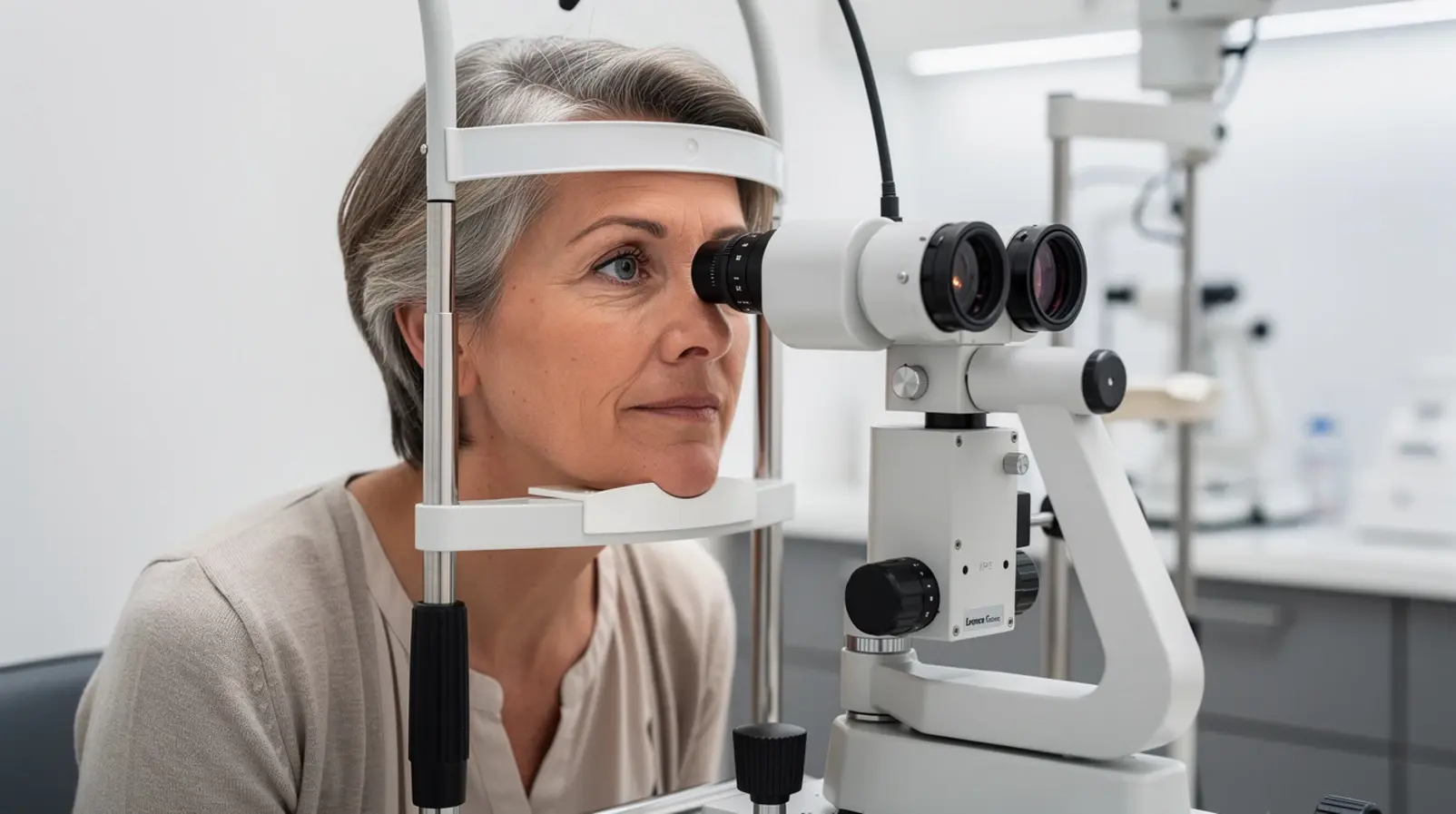
Basic health insurance may cover upper blepharoplasty only when excess skin objectively obstructs the superior visual field. This must be demonstrated by automated perimetry (a test measuring the extent of the visual field) and an ophthalmological examination documenting the link between dermatochalasis (excess skin) or ptosis and visual impairment. Without these documents, no coverage will be granted, even if the functional impairment is genuinely experienced in daily life.
Lower blepharoplasty follows a different logic. Treating fat pockets or excess skin beneath the eyes is considered a cosmetic procedure by basic health insurance, regardless of the psychological impact or the appearance of fatigue it may cause. The cost therefore remains entirely at your expense.
In the common scenario of a mixed indication — a functional upper eyelid combined with a cosmetic lower eyelid within the same procedure — two billing frameworks coexist. One portion follows the TARDOC health insurance fee schedule, while the other falls under private cosmetic fees. This breakdown must appear clearly on your quote. If you present ptosis and dermatochalasis of the upper eyelids with documented visual impairment, your file can be prepared for submission to your insurer.
The Practical Steps to Obtain Basic Health Insurance Coverage
Obtaining reimbursement from basic health insurance for upper blepharoplasty follows a specific administrative process. Anticipating these steps several weeks before surgery is essential to a successful outcome.
- Specialist consultation and visual assessment: an ophthalmologist or oculoplastic surgeon performs a comprehensive examination including visual acuity, automated perimetry of the visual field, and standardised photographs.
- Preparation of the medical report: this document establishes the functional impact of excess skin or ptosis on your vision, based on objective examination findings.
- Prior authorisation request: the report and examination results are submitted to your insurer, who issues a decision before the operation takes place.
- Obtaining written approval: written approval from your insurer must be in your possession before surgery; without it, reimbursement may be refused after the fact.
- Scheduling the procedure: once approval has been received, the surgical date can be confirmed with confidence, along with a finalised financial quote.
At Dr Bela’s practice in Geneva, the oculoplastic assessment and preparation of the insurance submission file are carried out in advance to ensure the process runs smoothly. If the assessment also reveals associated canthal tendon laxity, the indications for canthoplasty are discussed and incorporated into the medical file submitted to the insurer, where clinically justified.
What Out-of-Pocket Costs to Expect Depending on Your Situation
Your out-of-pocket costs depend directly on your specific situation. Three scenarios cover the majority of cases encountered in French-speaking Switzerland.
First scenario: basic health insurance approved for a functional indication. When the criteria are met and approval has been obtained, basic health insurance typically covers approximately 80 to 90% of the portion deemed medically necessary, representing a reimbursement in the region of CHF 1,500 to CHF 3,000. Your remaining costs will then depend on your annual deductible, the 10% co-payment, and any supplementary insurance that may contribute further.
Second scenario: purely cosmetic blepharoplasty. The full cost remains at your expense, with no contribution from basic health insurance. For four-eyelid surgery, you should therefore budget between CHF 6,000 and CHF 8,000 out of pocket, or more depending on any associated procedures.
Third scenario: mixed indication. Consider, for example, an upper eyelid covered at CHF 2,000 by basic health insurance, combined with a cosmetic lower eyelid billed at CHF 3,500. Your out-of-pocket costs would then include the co-payment on the medical portion plus the full cosmetic portion. A broader combination — such as a blepharoplasty combined with a facelift — mechanically increases these costs, as the facelift component remains entirely cosmetic even if the upper eyelid qualifies for coverage.
Supplementary insurance plans may sometimes contribute partially to out-of-pocket costs, depending on the benefits included in your policy. Contact your insurer in advance to clarify your specific coverage — ideally in writing — so that you have a binding response at the time of billing.
How long does it take to receive a response from basic health insurance?
Processing times vary between insurers, but you should generally allow between two and six weeks from submission of the complete file to receipt of a written decision. It is advisable to initiate this process several months before your planned surgery date.
Can supplementary health insurance cover cosmetic blepharoplasty?
Some supplementary insurance plans offer partial reimbursement for cosmetic procedures, subject to membership duration requirements and annual benefit limits. It is essential to review your policy and request a written estimate before proceeding with surgery.
Does ptosis combined with excess skin affect the overall cost?
Yes, correcting ptosis (drooping of the levator muscle) requires an additional surgical step on top of the blepharoplasty, which increases the total cost. True ptosis may also qualify for coverage under basic health insurance if it demonstrably affects the visual field.
Can blepharoplasty be paid in instalments?
Payment arrangements depend on each practice and the clinic where the procedure takes place. This can be discussed during the preoperative consultation, as some facilities accept staged payments or a deposit followed by the balance before surgery.
What happens if the insurer refuses coverage?
If your claim is refused, you can request further clarification from your insurer, submit additional diagnostic findings, or ask for a reassessment. Without prior written approval, surgery can still go ahead but will be entirely at your own expense.